Youth Changemakers: How STEM Education in the Caribbean Is Building the Region’s “Silicon Forest” By Stefanie Gouveia
Shergaun Roserie’s Mission to Empower Caribbean Youth Through Technology
The future of STEM education in the Caribbean is being shaped by a new generation of innovators who are combining technology, entrepreneurship, and social impact to transform regional development. Among these emerging leaders is Shergaun Roserie, a St. Lucian techpreneur whose work in robotics, digital literacy, and software engineering reflects the growing momentum behind the Caribbean tech ecosystem.
As co-founder of Orbtronics and a mechanical engineer at Microsoft, Shergaun has dedicated his career to advancing equitable access to technology and preparing Caribbean youth for the future digital economy (Gouveia, 2024). His work strongly aligns with the United Nations’ Sustainable Development Goal 8, which promotes inclusive and sustainable economic growth, productive employment, and decent work opportunities for all (United Nations, 2023).
Early Exposure to STEM Education in the Caribbean
Shergaun’s journey into engineering and innovation began in 2016 when he participated in the Student Program for Innovation in Science and Engineering (SPISE) at The University of the West Indies Cave Hill Campus in Barbados. SPISE is an intensive programme designed for high-performing Caribbean secondary school students interested in science, technology, engineering, and mathematics (Caribbean Science Foundation, 2024).
At only 16 years old, Shergaun completed university-level coursework alongside four other students from the region. Reflecting on the experience, he recognised the transformative power of STEM, explaining that one innovative solution developed through science and engineering could positively impact millions of people (Gouveia, 2024).
This experience highlights the growing importance of STEM education in the Caribbean as governments, educators, and private sector organisations increasingly recognise technology as a driver of economic competitiveness and workforce resilience (Inter-American Development Bank [IDB], 2022).
Robotics Competitions and the Caribbean Digital Divide
In 2017, Shergaun and three other students represented Saint Lucia at the Global Robotics Challenge in Washington, D.C.. Although the team performed competitively, the experience exposed a significant disparity between Caribbean students and participants from technologically advanced nations (Gouveia, 2024).
The team observed major differences in access to advanced engineering tools, robotics infrastructure, and digital resources. This realisation became a turning point for Shergaun, inspiring him to create opportunities that would reduce technological inequality and improve access to robotics and programming for youth across the Caribbean.
Research by the United Nations Educational, Scientific and Cultural Organization has similarly identified unequal access to digital technologies as one of the major barriers affecting education and innovation in developing regions (UNESCO, 2023).
Orbtronics St. Lucia and the Growth of the Caribbean Tech Ecosystem
In 2020, Shergaun and co-founder Keeghan Patrick officially launched Orbtronics, a St. Lucian engineering and technology company focused on software development, hardware solutions, and digital education initiatives.
Today, Orbtronics is contributing to the expansion of the Caribbean tech ecosystem through programmes that combine entrepreneurship, innovation, and workforce development. The company’s mission is to empower Caribbean citizens with practical digital skills while fostering stronger regional technology networks (Gouveia, 2024).
The rise of companies such as Orbtronics reflects broader regional trends. According to the Economic Commission for Latin America and the Caribbean, Caribbean economies are increasingly investing in digital transformation to support innovation, employment creation, and economic diversification (ECLAC, 2022).
Robotics and Programming for Youth
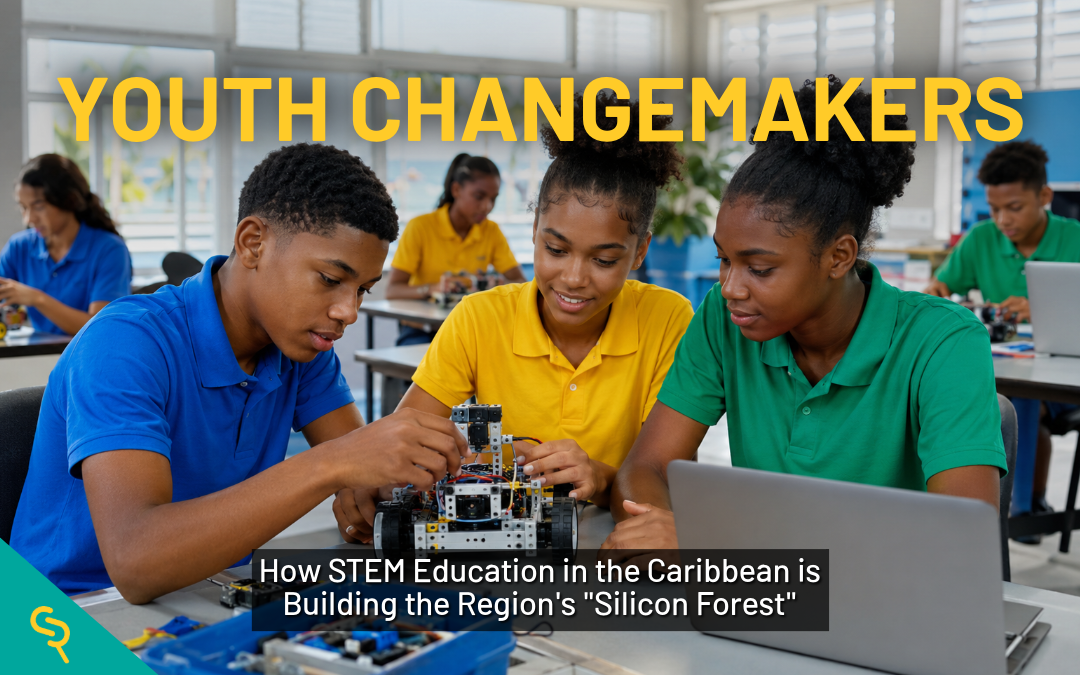
One of Orbtronics’ flagship initiatives is the Orbtronics Junior Programme, which targets students between the ages of 11 and 16. The programme introduces participants to robotics, programming, artificial intelligence, digital media, and entrepreneurship through hands-on, project-based learning (Gouveia, 2024).
Students spend several weeks developing technical competencies while also learning how to design business concepts, create marketing strategies, and develop revenue models. This interdisciplinary approach reflects global shifts in education where creativity, digital literacy, and entrepreneurial thinking are increasingly integrated into STEM learning environments (World Economic Forum, 2023).
Programmes like Orbtronics Junior are becoming important examples of effective robotics and programming education for Caribbean youth because they bridge the gap between classroom learning and real-world application.
Expanding Digital Literacy Programs in the Caribbean
In addition to robotics education, Orbtronics also operates Digital Literacy Programmes designed for individuals aged 16–45. These workshops focus on practical skills such as artificial intelligence, cybersecurity, business development, and data-driven decision-making (Gouveia, 2024).
| Programme Area | Skills Developed |
| Artificial Intelligence | AI awareness and workplace application |
| Cybersecurity | Digital protection and online safety |
| Data Analytics | Critical thinking and informed decision-making |
| Business Skills | Entrepreneurship and innovation |
| Life Skills | Communication and career readiness |
The programmes are intentionally designed to make technology education accessible to diverse communities, including individuals outside traditional academic pathways.
According to UNESCO (2023), digital literacy has become an essential competency for workforce participation and social inclusion, particularly in developing economies adapting to rapid technological change.
Empowering Communities Through STEM
The impact of the Orbtronics programmes extends beyond technical education. Shergaun shared the story of a female participant from the company’s first summer programme who later introduced programming classes within her own school and community. She eventually received national recognition for a technology initiative and pursued further education in biotechnology (Gouveia, 2024).
This example demonstrates how STEM education in the Caribbean can create long-term social impact by producing future leaders who reinvest their skills into community development. Research consistently shows that exposure to STEM education increases career mobility, innovation capacity, and economic opportunity among youth populations (IDB, 2022).
AI Solutions for Government Procurement in the Caribbean
Beyond education, Orbtronics develops technology solutions that address structural regional challenges. One example is RIFBID, an AI-powered procurement platform designed to connect suppliers with government tenders across the Caribbean (Gouveia, 2024).
The platform seeks to improve transparency and accessibility within procurement systems by helping small and medium-sized enterprises identify relevant opportunities, develop stronger proposals, and build professional networks.
As Caribbean governments continue modernising public sector operations, AI solutions such as RIFBID may become increasingly important in improving administrative efficiency and supporting SME participation in regional economies (ECLAC, 2022).
Technology, Community Safety, and Social Innovation
Orbtronics has also explored the use of technology to support crime reduction initiatives in Saint Lucia. Through its WiPatrol platform, citizens can anonymously report criminal activity and share information with authorities while maintaining personal security (Gouveia, 2024).
This initiative reflects the broader role technology can play in strengthening civic participation and community engagement. It also demonstrates how Caribbean technology companies are increasingly applying innovation to social and public-sector challenges.
The Caribbean “Silicon Forest” and the Future of Remote Work
Shergaun describes his long-term vision for the region as the creation of a “Silicon Forest” — a connected Caribbean technology ecosystem inspired by the collaborative innovation culture associated with Silicon Valley.
Unlike traditional technology hubs concentrated within a single geographic area, the Silicon Forest concept emphasises regional collaboration, digital entrepreneurship, and interconnected talent networks across Caribbean nations (Gouveia, 2024).
The growth of remote work opportunities has made this vision increasingly realistic. Caribbean youth with advanced STEM and digital skills can now access international employment opportunities while remaining within the region. Shergaun’s own position at Microsoft demonstrates how Caribbean professionals can successfully participate in global technology industries while contributing to regional development initiatives.
According to the World Economic Forum (2023), digital transformation and remote work are reshaping global labour markets, creating new opportunities for developing regions with growing technology talent pools.
Why STEM Education Matters for the Caribbean’s Future
The Caribbean’s future competitiveness will increasingly depend on its ability to cultivate digital talent, technological innovation, and entrepreneurial capacity. Organisations like Orbtronics are helping bridge the gap between education and employment by creating pathways into robotics, software engineering, AI, cybersecurity, and digital entrepreneurship.
Through educational programmes, regional partnerships, and socially driven technology solutions, Orbtronics is contributing to the foundation of a sustainable Caribbean digital economy.
For Shergaun, however, the mission remains rooted in community impact. As he reflected, “When I work and make plans for Orbtronics, my thoughts are; I need to give back to my community and need to keep improving my country and my region” (Gouveia, 2024).
References
Caribbean Science Foundation. (2024). Student Program for Innovation in Science and Engineering (SPISE). Caribbean Science Foundation. https://caribbeanscience.org/spise/
Economic Commission for Latin America and the Caribbean. (2022). Digital transformation in the Caribbean: Opportunities for sustainable development. United Nations. https://www.cepal.org
Gouveia, S. (2024). Budding techpreneur’s journey to the Silicon Forest. Corporate Sustainability Review 2023–2024, 57–59.
Inter-American Development Bank. (2022). Digital skills and the future of work in Latin America and the Caribbean. IDB Publications. https://publications.iadb.org
United Nations. (2023). Sustainable Development Goal 8: Decent work and economic growth. United Nations Sustainable Development Goals. https://sdgs.un.org/goals/goal8
United Nations Educational, Scientific and Cultural Organization. (2023). Global education monitoring report: Technology in education. UNESCO. https://www.unesco.org
World Economic Forum. (2023). The future of jobs report 2023. World Economic Forum. https://www.weforum.org/reports/the-future-of-jobs-report-2023/