
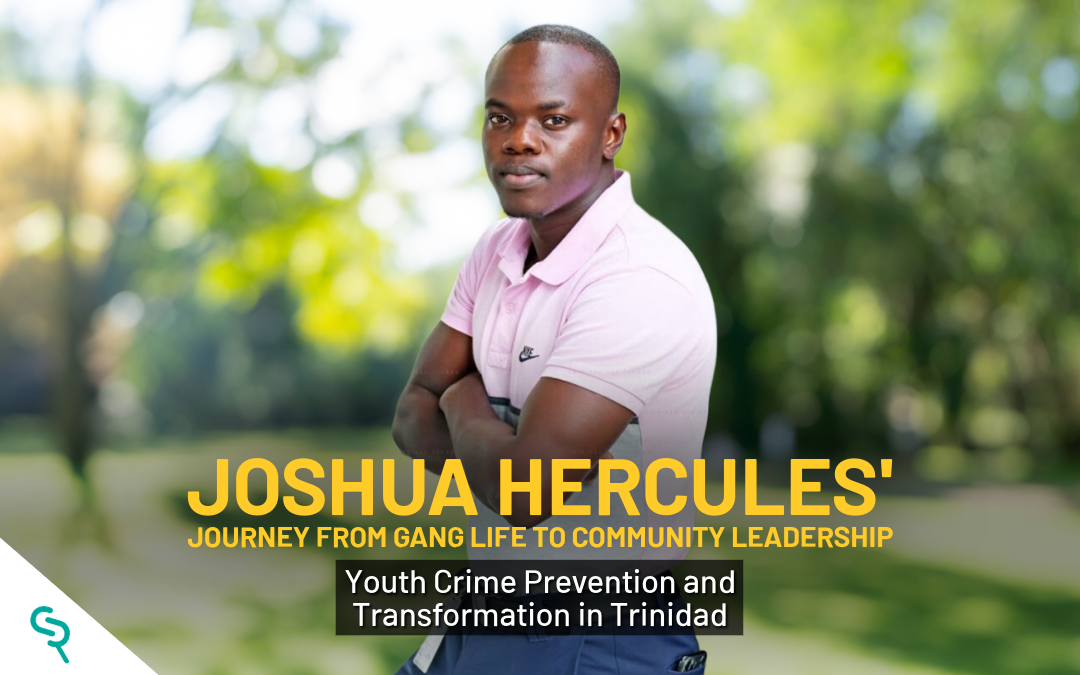

Joshua Hercules’ Journey from Gang Life to Community Leadership -Youth Crime Prevention and Transformation in Trinidad:
Youth crime prevention and transformation in Trinidad and Tobago requires more than enforcement strategies alone. Across vulnerable communities, many young people face poverty, violence, social exclusion, unemployment, and limited access to mentorship opportunities. Increasingly, community leaders and non-governmental organisations (NGOs) are demonstrating that prevention, rehabilitation, faith-based intervention, and vocational training can significantly redirect the lives of at-risk youth (United Nations Office on Drugs and Crime [UNODC], 2022).
One powerful example is the story of Joshua Hercules — a former gang-affiliated youth who transformed his life through faith, education, entrepreneurship, and mentorship. Today, Joshua is a healthcare worker, agricultural entrepreneur, motivational speaker, and founder of the NGO Reach Them Before We Lose Them.
His story offers an important case study in gang intervention programmes in the Caribbean and the role of lived experience in mentoring vulnerable youth.
From Gang Culture to Purpose-Driven Leadership – Parting from a Life of Crime
Growing up in South Trinidad, Joshua Hercules became involved in gang activity during his teenage years. By age 16, he was immersed in an environment shaped by violence, street conflict, marijuana use, alcohol abuse, and the pursuit of status within gang culture.
Like many vulnerable young men exposed to unstable community environments, the attraction of fast money, power, and peer recognition heavily influenced his lifestyle.
Joshua later reflected that his influence within the gang structure gave him a leadership position among his peers. However, beneath the surface, the environment exposed him to cycles of violence and self-destruction.
Research across the Caribbean shows that gang involvement among youth is often linked to social exclusion, unemployment, trauma exposure, weak educational support systems, and limited access to mentorship (UNODC, 2022).
How to Leave a Gang and Change Your Life in Trinidad
Joshua’s life changed dramatically on New Year’s Eve 2015. It was a turning point through faith
Preparing to host a party centred around alcohol and marijuana use, he unexpectedly encountered a local church group that invited him to attend a religious service. Initially declining the invitation, Joshua later reconsidered and attended the service — a decision he now describes as transformational.
He credits this moment with beginning his journey away from violence, substance abuse, and criminal influences.
Faith-based organisations and mentorship programmes continue to play a significant role in youth rehabilitation efforts throughout Trinidad and Tobago and the wider Caribbean. Studies have shown that community support systems, mentorship, spirituality, and positive peer engagement can significantly improve rehabilitation outcomes for vulnerable youth populations (Caribbean Policy Research Institute, 2021).
For Joshua, faith became the foundation for rebuilding his identity, discipline, and long-term purpose.
The Role of Technical Education in Youth Transformation and Reintegration
In 2016, Joshua enrolled at MIC Institute of Technology to pursue Food Preparation and Culinary Arts.
Vocational training for at-risk youth is increasingly recognised as a critical intervention strategy across the Caribbean. Programmes focused on technical education, employability skills, and entrepreneurship help vulnerable young people build legitimate income opportunities while strengthening self-worth and independence.
Joshua’s experience at MIC became an important bridge between his past and his future career pathway.
While studying, he also began informally mentoring other students — particularly those enrolled in rehabilitation-oriented programmes and referred through the justice system.
Reach Them Before We Lose Them: A Grassroots Gang Intervention Programme
Building an NGO for At-Risk Youth Mentorship in Trinidad
Joshua’s experiences ultimately led to the creation of Reach Them Before We Lose Them in 2018.
The organisation focuses on:
- Character development
- Motivational speaking
- Youth mentorship
- Crime prevention
- School outreach
- Violence intervention
- Faith-based guidance
The NGO conducts seminars, school tours, and community events targeting young people exposed to violence, gang activity, and social instability.
Joshua’s lived experience gives him credibility with vulnerable youth who often distrust traditional authority figures.
As he explains, many young people respond because they know he understands their reality firsthand.
Addressing the Impact of Trinibad Music on Youth Culture
One of Joshua’s more controversial but important observations relates to the influence of certain forms of Trinibad dancehall music on youth behaviour.
According to Joshua, some vulnerable young people interpret lyrics focused on violence, criminality, and hardship not as cautionary stories, but as aspirational lifestyles.
Trinibad Dancehall Influence on Youth
The debate surrounding Trinibad music reflects broader global conversations about the relationship between media, identity, violence, and youth culture.
While cultural expression remains important, social advocates in Trinidad and Tobago continue to debate:
- The glamorisation of violence
- Gang symbolism
- Social media influence
- Youth identity formation
- The responsibilities of influencers and artists
Joshua argues that schools and institutions must carefully evaluate the types of role models and influencers presented to vulnerable youth audiences.
Civilian Conservation Corps and School Outreach
Joshua’s NGO has partnered with schools and programmes such as the Civilian Conservation Corps to deliver motivational talks and character-building sessions.
These outreach initiatives provide:
- Positive mentorship
- Violence prevention messaging
- Emotional support
- Leadership guidance
- Hope-based interventions
Research shows that early intervention and mentorship programmes can significantly reduce youth vulnerability to gang recruitment and criminal activity (World Bank, 2022).
The Good Hustler: Entrepreneurship and Agricultural Development
Success Stories of Agricultural Entrepreneurs in San Fernando
Alongside community work, Joshua has also built a growing agricultural business with his wife called A&J Produce.
Founded during the COVID-19 pandemic in 2020, the business began with modest operations selling locally sourced vegetables and produce throughout South Trinidad.
Initially, Joshua and his wife drove around attempting to sell produce directly to households during lockdown restrictions. Over time, customer demand grew steadily.
Today, A&J Produce operates from Corinth Hill, San Fernando, where it serves a growing customer base.
The Viral Growth Story Behind A&J Produce
A major turning point for the business occurred after Joshua posted a promotional video online. Within three days, the video reportedly reached approximately 200,000 views on Facebook.
The exposure significantly boosted awareness and sales.
The story demonstrates how digital entrepreneurship and social media visibility can support small agricultural businesses in Trinidad and Tobago — particularly during periods of economic uncertainty.
Food Security, Agriculture and Community Resilience
Joshua’s work in agriculture aligns with growing regional conversations around:
- Food security
- Local farming
- Sustainable agriculture
- Nutrition awareness
- Economic resilience
At the same time, he works professionally as a Nutrition and Dietetic Aid at the South West Regional Health Authority (SWRHA), helping prepare meals tailored to patient dietary needs.
His dual involvement in healthcare and agriculture reflects an integrated approach to community wellbeing and sustainability.
Joshua Hercules’ 3 Tips for Young Entrepreneurs
Joshua frequently shares practical advice for young people seeking to change their lives and pursue entrepreneurship.
- Continue to Follow Your Dream
Every successful business begins with a vision. Joshua encourages young people not to abandon their goals simply because resources or opportunities seem limited.
- Don’t Procrastinate
He emphasises the importance of embracing humble beginnings and difficult work before expecting major success.
- Build Strong Guiding Principles
Joshua believes discipline, faith, perseverance, and consistency are essential foundations for long-term success — particularly during periods of hardship.
These principles have become central themes in his mentorship work with at-risk youth across Trinidad and Tobago.
The Role of Faith-Based NGOs in Reducing Crime in Trinidad and Tobago
Faith-based NGOs and community organisations continue to play a critical role in violence prevention and youth rehabilitation across the Caribbean.
Programmes such as Reach Them Before We Lose Them provide:
- Emotional support
- Mentorship
- Community belonging
- Positive role models
- Reintegration pathways
- Alternative visions of success
Importantly, these interventions often reach young people who may feel disconnected from formal institutions.
Research consistently demonstrates that mentorship and community engagement significantly improve outcomes for vulnerable youth populations exposed to violence and social instability (UNICEF, 2023).
A Different Kind of Leadership
Today, Joshua Hercules represents a different model of leadership — one rooted not in status or fear, but in transformation, accountability, resilience, and service.
His journey from gang involvement to NGO founder, healthcare worker, entrepreneur, husband, and mentor highlights the importance of second chances and community support systems.
At a time when Trinidad and Tobago continues to grapple with youth violence and crime, stories like Joshua’s demonstrate that meaningful transformation is possible when mentorship, education, entrepreneurship, and hope intersect.
References
Caribbean Policy Research Institute. (2021). Youth violence prevention and social resilience in the Caribbean. CAPRI Publications. https://www.capricaribbean.org
United Nations Office on Drugs and Crime. (2022). Global study on homicide: Caribbean youth violence trends and prevention strategies. United Nations Office on Drugs and Crime. https://www.unodc.org
United Nations Children’s Fund. (2023). Adolescent development and participation in the Caribbean. UNICEF Caribbean Office. https://www.unicef.org
World Bank. (2022). Crime and violence prevention in Latin America and the Caribbean. World Bank Group. https://www.worldbank.org
MIC Institute of Technology