
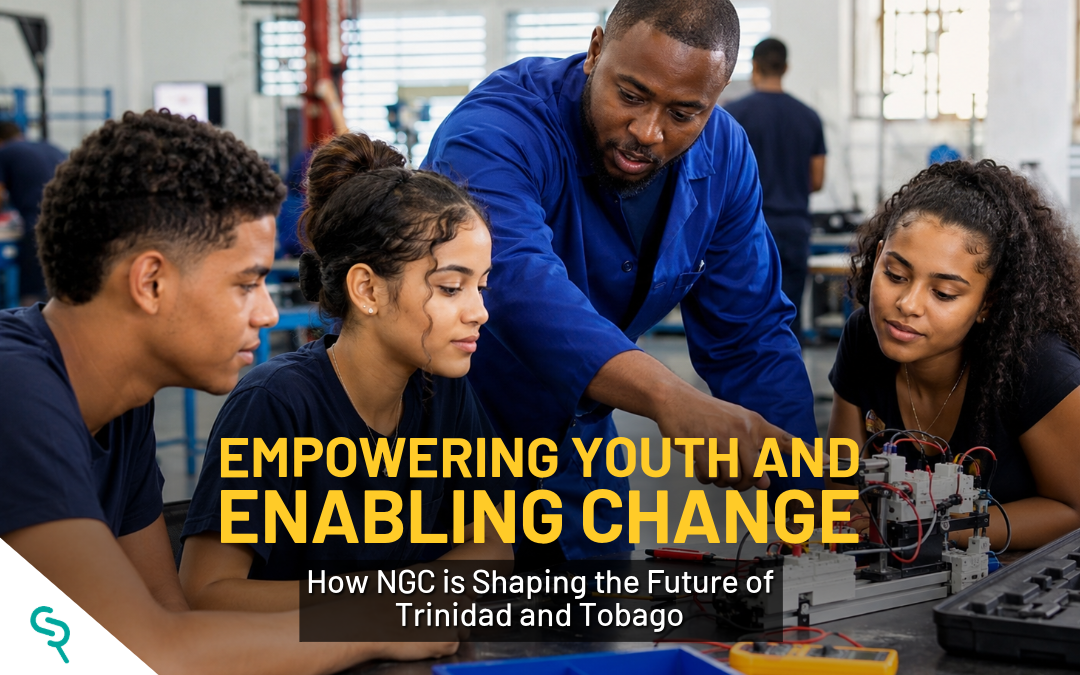

Empowering Youth and Enabling Change: How NGC Is Shaping the Future of Trinidad and Tobago
In business, succession planning is essential for long-term sustainability. Organizations invest heavily in preparing future leaders to assume responsibility, maintain continuity, and drive innovation.
The same principle applies to nations.
A country’s future depends on its ability to prepare young people for leadership, employment, entrepreneurship, and community development. Through strategic investments in education, athletics, mentorship, and vocational training, corporations can help create the next generation of changemakers.
For The National Gas Company of Trinidad and Tobago Limited (NGC), youth development is a central pillar of its Corporate Social Responsibility (CSR) strategy. Across sport, education, community development, and skills training, the company has consistently focused on youth empowerment and succession planning in Trinidad and Tobago.
These investments align closely with the United Nations Sustainable Development Goals (SDGs), particularly:
- SDG 4: Quality Education
- SDG 8: Decent Work and Economic Growth
- SDG 10: Reduced Inequalities
According to the United Nations Development Programme (UNDP, 2023), long-term national sustainability depends heavily on developing youth leadership, workforce readiness, and inclusive economic participation.
Why Is Youth Development Important?
Youth development programmes create pathways for social mobility, economic resilience, and community leadership.
Research consistently shows that mentorship, skills training, sports participation, and leadership opportunities improve employment outcomes, strengthen civic engagement, and reduce social vulnerability among young people (World Bank, 2022).
NGC’s approach reflects a broader understanding of corporate succession planning models — one that extends beyond internal workforce continuity and contributes to national development.
The company’s partnerships with organizations such as the Police Youth Clubs of Trinidad and Tobago (PYC), Youth Training and Employment Partnership Programme (YTEPP), and National Association of Athletics Administrations of Trinidad and Tobago (NAAATT) demonstrate how CSR can deliver measurable social impact.
Program Snapshot: NGC’s Youth Empowerment Partnerships
| Program | Partner | Impact Area |
| Police Youth Clubs (PYC) | Trinidad and Tobago Police Service | Community leadership and mentorship |
| Youth Elite Programme (YEP) | NAAATT | Elite athletics development |
| Vocational Skills Training | YTEPP | Technical education and employability |
Police Youth Clubs Trinidad: Developing Community Leaders
NGC has maintained a longstanding partnership with the Police Youth Clubs Trinidad programme, particularly within fenceline communities such as La Brea.
These clubs provide young people with opportunities for:
- Academic support
- Leadership development
- Mentorship
- Extracurricular engagement
- Skills training
- Social development
NGC also partnered with YTEPP to deliver vocational skills training to club members in areas such as electrical installation, barbering, phone repair, and AutoCAD software training.
The programme demonstrates how targeted youth interventions can help strengthen vulnerable communities while preparing young people for leadership roles.
How Do Police Youth Clubs Impact Community Development in La Brea?
One of the clearest examples of the programme’s impact is the story of Jillon Rasheba Lewis.
At just 26 years old, Lewis became one of the youngest councillors serving within the Siparia Borough Corporation, representing the Brighton/Vessigny electoral district.
His leadership journey began through the La Brea Police Youth Club in 2019 after enrolling in an electrical installation course facilitated by YTEPP.
From there, he expanded his involvement by pursuing additional technical courses and eventually serving as Youth President within the club.
Lewis credits mentorship and community engagement opportunities for helping shape his personal and professional development.
He also overcame a childhood speech impediment through public speaking classes, professional support, and persistence — experiences that strengthened his confidence and communication skills for public leadership.
Today, he advocates strongly for youth development initiatives and believes they are essential for rebuilding trust, opportunity, and community pride within La Brea.
His story reflects the long-term social return on investment (ROI) of CSR programmes focused on leadership development and youth empowerment.
YTEPP Vocational Skills Training and Workforce Readiness
Vocational education remains one of the most effective strategies for improving youth employability and economic mobility.
According to the International Labour Organization (ILO, 2023), technical and vocational education programmes significantly increase workforce participation and reduce youth unemployment, particularly in underserved communities.
Through its partnership with YTEPP, NGC supports technical training opportunities that prepare young people for sustainable employment pathways.
Benefits of Vocational Training for Youth in Fenceline Communities
For communities located near industrial operations, vocational training programmes create several important benefits:
- Increased employability
- Improved income opportunities
- Greater entrepreneurship potential
- Enhanced technical skills
- Reduced social vulnerability
- Stronger local workforce capacity
These initiatives also contribute to long-term national economic diversification and workforce sustainability.
NGC Youth Elite Programme (YEP): Supporting Podium Potential Athletes T&T
Beyond workforce development, NGC has also made strategic investments in athletics through its partnership with NAAATT.
The NGC Youth Elite Programme (YEP), launched in 2017, was designed to support athletes who demonstrate strong “podium potential” at regional and international competitions.
The programme provides:
- Specialist coaching
- Sports science support
- Nutritional guidance
- Leadership development
- Academic support
- International exposure opportunities
Importantly, the initiative emphasizes the importance of balancing athletic excellence with education and life skills development.
Moving Beyond Track: The Future of Field Events in T&T
Trinidad and Tobago has historically produced globally recognized sprint athletes, but field events have received less international attention.
Athletes such as Aaron Antoine are helping change that narrative.
A national junior and senior champion and NAAATT high jump record holder, Antoine has emerged as one of the country’s most promising field event athletes.
His athletic journey began at age eight and accelerated after winning Trinidad and Tobago’s first gold medal at the Caribbean Union of Teachers Games in 2014.
Through the NGC Youth Elite Programme, Antoine gained access to advanced training equipment, nutritional guidance, and greater international exposure — opportunities that ultimately contributed to recruitment offers from several United States universities.
He later accepted an offer from Kansas State University.
Pathways for High School Athletes to US Colleges in the Caribbean
For many Caribbean athletes, scholarships to US universities provide transformative opportunities for education, professional development, and international competition.
Programmes such as YEP help student-athletes prepare for these opportunities by supporting:
- Athletic performance development
- Academic preparedness
- Recruitment exposure
- Personal branding
- Mental resilience
- Long-term career planning
Antoine believes Trinidad and Tobago can produce more elite field athletes if stronger developmental structures are implemented at the school level.
He advocates for earlier talent identification and sustained athlete development programmes that guide students from primary school through senior competition.
Corporate Succession Planning and National Sustainability
NGC’s youth-focused CSR strategy demonstrates that succession planning is no longer limited to corporate boardrooms.
Modern corporate sustainability increasingly requires investment in national human capital, community resilience, and future leadership capacity.
Through partnerships in athletics, vocational training, and youth mentorship, NGC is helping develop:
- Future political leaders
- Skilled technical workers
- International athletes
- Community advocates
- Young changemakers
This integrated approach aligns closely with evolving Environmental, Social, and Governance (ESG) priorities, where organizations are increasingly evaluated based on long-term societal impact (PwC, 2023).
Empowering Youth Is an Investment in Trinidad and Tobago’s Future
The stories of Jillon Rasheba Lewis and Aaron Antoine demonstrate the transformative power of opportunity, mentorship, and structured support systems.
Whether through Police Youth Clubs Trinidad, YTEPP vocational skills training, or the NGC Youth Elite Programme, these initiatives show that meaningful investment in youth development creates benefits that extend far beyond individual achievement.
It strengthens communities.
It builds leadership.
And it prepares Trinidad and Tobago for a more resilient and sustainable future.
References
International Labour Organization. (2023). Global Employment Trends for Youth 2023: Investing in Transforming Futures for Young People. ILO. https://www.ilo.org/global/publications/books/global-employment-trends-for-youth/2023
PwC. (2023). ESG and the Future of Corporate Sustainability Reporting. PricewaterhouseCoopers. https://www.pwc.com/gx/en/services/sustainability.html
United Nations Development Programme. (2023). Youth Empowerment and Sustainable Development. UNDP. https://www.undp.org
World Bank. (2022). Investing in Youth for Sustainable Development. World Bank Group. https://www.worldbank.org/en/topic/youth-development