
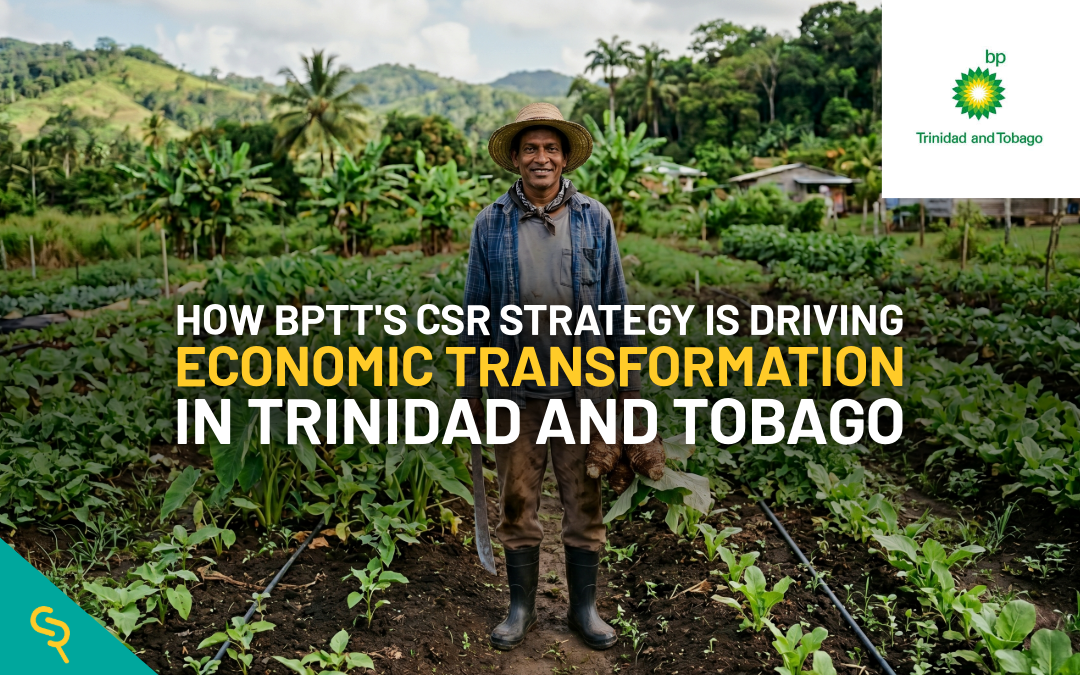

How bpTT’s CSR Strategy is Driving Economic Transformation in Trinidad and Tobago
Overview: bpTT Corporate Social Responsibility in Action
bp Trinidad and Tobago (bpTT) remains a central force in economic transformation in Trinidad and Tobago, combining energy leadership with a long-term commitment to sustainable development, capacity building, and community investment.
As one of the country’s largest energy producer, bpTT’s Corporate Social Responsibility (CSR) strategy held to a simple principle:
The sustainability of the company is directly linked to the sustainability of the nation.
This approach has translated into targeted investments in:
Education and youth empowerment
Enterprise development
Environmental stewardship
Arts and culture
What is bpTT’s Social Investment Strategy?
bpTT’s early CSR strategy focused on building national capability and supporting inclusive growth through structured, data-driven interventions.
Key pillars include:
Education & Capacity Building
Enterprise & Manpower Development
Environmental Responsibility
Arts & Culture Investment
These initiatives align with global frameworks such as the United Nations Global Compact, ensuring international best practice in sustainability reporting and governance.
bpTT’s Brighter Prospects Programme – Education in Mayaro
One of the most impactful initiatives under bpTT’s CSR strategy is the Brighter Prospects scholarship programme, focused on youth in Mayaro.
Key Impact:
Over 300 students supported
Up to TT$10,000 per student annually
75+ graduates by 2012
Access to tertiary education through institutions like University of the West Indies
This programme goes beyond financial aid. It provides mentorship and long-term support, helping students build careers and contribute to national development.
bpTT’s Micro Enterprise Loans in Mayaro: The MIPED Model
The bp Mayaro Initiative for Private Enterprise Development (MIPED) is a flagship example of micro enterprise lending in Trinidad and Tobago.
What is MIPED?
A community-driven lending programme designed to stimulate entrepreneurship and reduce poverty.
Programme Structure:
- HOPE (Helping Our People Prosper Economically): Loans up to TT$2,000
- PROFED (Programme for Enterprise Development): Loans up to TT$100,000
- Results (2003–2012):
- TT$37M+ disbursed
- 2,000 entrepreneurs supported
- 6,000+ jobs created (direct & indirect)
- Repayment rate above 85%
Inspired by models like Grameen Bank, MIPED demonstrates how enterprise development can transform rural economies.
Driving Sustainable Development in Mayaro
bpTT’s CSR efforts are deeply rooted in its home community of Mayaro, where investment goes beyond funding to include infrastructure and institutional support.
Example: Mayaro Resource Centre (MRC)
A transformed facility offering:
Academic programmes via University of the West Indies Open Campus
Vocational training
Adult literacy programmes
Community development services
Impact: Improved access to education, skills training, and employment pathways in a previously underserved region.
Revenue Management and the “Resource Curse” in Trinidad and Tobago
bpTT has also contributed to national dialogue on revenue management in hydrocarbon economies. In partnership with the University of the West Indies, bpTT hosted a major conference on managing oil and gas revenues.
The Key Issue is the risk of the Resource Curse—where countries rich in natural resources experience poor economic outcomes.
Insights from Richard Auty, Professor Emeritus of Economic Geography of Lancaster University:
Resource wealth must be strategically reinvested and long-term sustainability will depend on economic diversification
Policy Focus Areas:
Transparency and accountability
Fiscal and regulatory reform
Diversification beyond hydrocarbons
Intergenerational equity
Economic Transformation Through CSR: A Dual Approach
bpTT’s CSR strategy operates on two levels:
- Micro-Level Impact
Community development in Mayaro
Skills training and education
Small business financing
- Macro-Level Influence
National policy dialogue
Revenue management frameworks
Economic diversification strategies
This dual approach ensures that CSR is not just philanthropic—but structural and transformational.
The Way Forward: A 2026 Perspective
While the original data reflects 2008–2013, the strategic relevance remains strong. However, bpTT social investment in Trinidad and Tobago is consistent with a focus on youth education, community development, and sustainable entrepreneurship, particularly in the Mayaro region. Key pillars include the “Brighter Prospects” tertiary scholarship, microfinance for local businesses, STEM literacy, and environmental sustainability initiatives.
Key Considerations going forward:
Increased focus on energy transition and renewables
Greater demand for ESG reporting and transparency
Expansion of digital education and skills training
Stronger emphasis on economic diversification beyond oil and gas
bpTT’s CSR Strategy as a Model for Sustainable Development
bpTT’s CSR strategy illustrates how an energy company can move beyond compliance to become a driver of national development by investing in:
People (education and skills)
Businesses (micro enterprise lending)
Policy (revenue management frameworks)
bpTT has helped shape a more resilient and diversified future for Trinidad and Tobago.